Somalia at Political Crossroads as Opposition Moves Toward Dialogue Under International Pressure
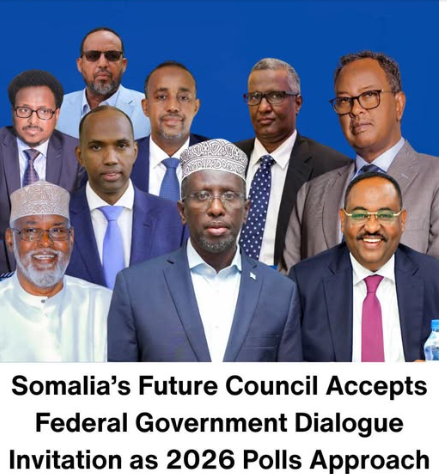
Somalia’s political scene is showing signs of a possible breakthrough as key opposition leaders move closer to accepting dialogue with the Federal Government, amid strong pressure from the international community.
On January 23, Puntland President Said Abdullahi Deni, a leading figure in the Somalia Future Council, held high-level talks in Nairobi with representatives from the UN, EU, UK, US, World Bank, and several European countries.
Discussions focused on Somalia’s political transition, federal–state relations, and concerns over prolonged political uncertainty ahead of the 2026 elections.
International partners have intensified calls for restraint, inclusivity, and dialogue, urging both the opposition and national leadership to attend the meeting scheduled for February 1, convened by President Hassan Sheikh Mohamud. Diplomats view the talks as critical to easing tensions and preventing further political polarization.
Sources indicate that most members of the Somalia Future Council are now inclined to accept the government’s invitation, marking a shift after weeks of skepticism.
This change is largely driven by strong international backing for dialogue and growing recognition that negotiation is preferable to continued confrontation.
If participation is formally endorsed, the Council is expected to form a Technical Committee to negotiate the agenda, venue, and timing of talks, insisting on a structured, bilateral dialogue with the Federal Government.
Observers say the upcoming Nairobi meeting could represent a turning point, offering a narrow but crucial opportunity to break the political deadlock and stabilize Somalia as the country moves toward the 2026 elections.