Prime Minister Hamza Warns About the Direction Somalia Is Heading

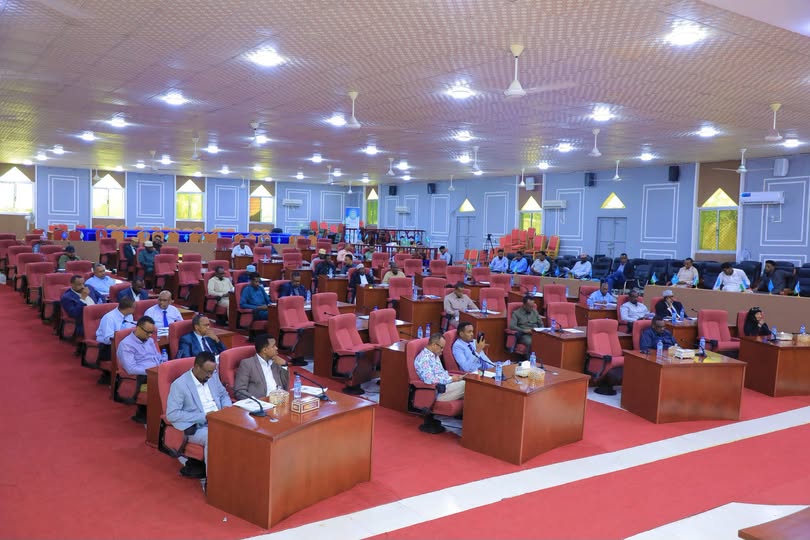
Somalia’s Prime Minister, Hamza Abdi Barre, delivered a speech in Mogadishu in which he made remarks that have sparked political discussion about the country’s governance, national unity, and the role of clans in Somali politics.
Hamza said Somali society needs to face the reality on the ground, rather than continue believing in an image of a fully unified state that does not reflect reality.
He said that although Somalia is formally one country and one government, clans still have significant influence, while social divisions and clan boundaries continue to pose challenges to building a strong national government.
During his speech, he said:
“We need to face the truth and move away from the illusion. Our government is a lie; saying that we are one united government is a lie. We are clans with boundaries, and Somalia has been tested by leaders who are empty and only seek power.”
His remarks attracted particular attention because he is the second-highest-ranking official in the federal government and directly addressed the continued influence of clan politics and social divisions on Somalia’s political system.
Somalia has struggled since the collapse of the central government in 1991 to rebuild state institutions, strengthen national unity, and restore government authority across the country.
The country’s federal system divides powers between the federal government and federal member states, each of which has its own administrations and institutions. However, clan-based political power-sharing, particularly the 4.5 system, continues to influence appointments, parliamentary selection, and the formation of government institutions.
The Prime Minister also said Somalia is moving toward an uncertain future and acknowledged that the path contains challenges and risks requiring political and social maturity.
His remarks come amid ongoing political disagreements over elections, federal government powers, relations between the federal government and member states, and the future of Somalia’s federal system.
The speech is likely to intensify debate about Somalia’s state-building process, the role of clans in politics, and how the country can move toward a political system based more on citizenship, law, and strong institutions.